Smart Alerts

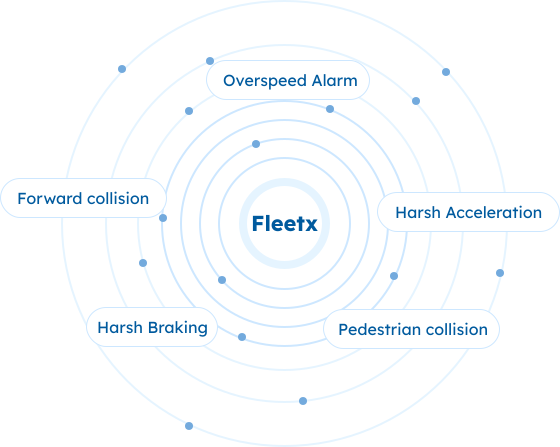
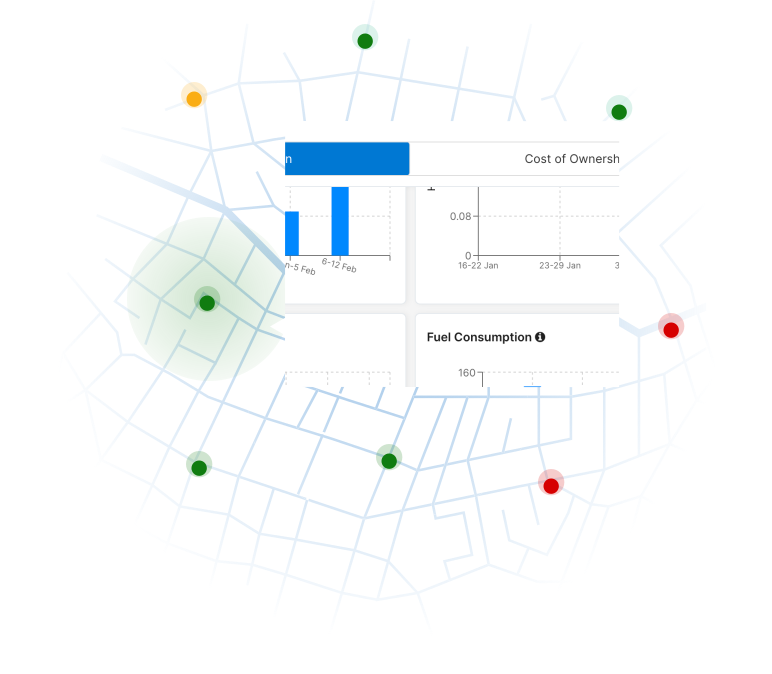
Prioritize Fleet safety with real-time alerts & mitigate operational risks. Fleetx's Smart Alarms utilize IoT connectivity for precise monitoring and triggering customizable notifications tailored to your needs
Schedule a demo
Collaborative Execution

Use IOT, GPS & Video Telematics Data to generate tailor made Alerts

Sensors that Speak Volumes

Green Check Mark
Use a diverse set of cutting edge sensors that handle various business use cases, be it fuel theft monitoring, temperature control or just SOS alerting system
Green Check Mark
Fleetx provides an umbrella service for all your sensor specific needs.
Green Check Mark
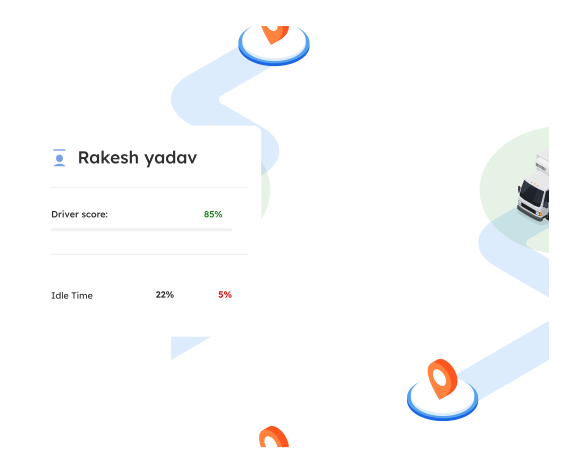
Proactively get alerts on DTCs, fuel fills/thefts, Excessive Idling, Drowsiness etc.
Sensors that Speak Volumes

GPS based Alerting System

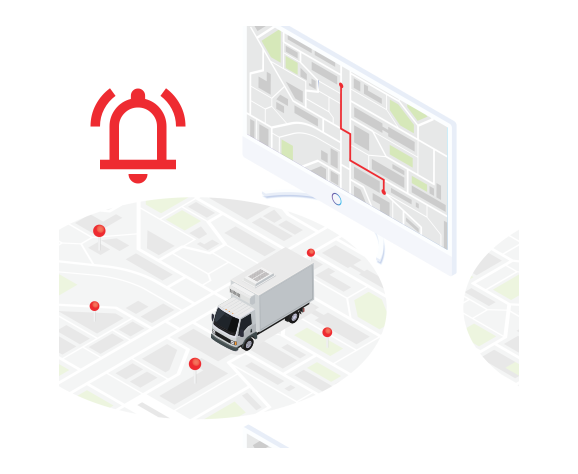
Redefine your fleet's boundaries with virtual geofencing. Receive instant alerts when your vehicles enter or exit designated areas, enhancing security, and optimizing route planning
GPS based Alerting System

Driving Behaviour

Green Check Mark
Prioritize safety with immediate notifications for unwanted driver behaviours such as driver fatigue, overspeeding, hard acceleration, sharp cornering etc.
Green Check Mark
Enhance road safety, prevent accidents, and ensure the well-being of your fleet.
Driving Behaviour
Key Benefits
Aggregation Feature
Aggregation Feature

Streamline your transportation operations with our TMS, optimizing indenting, vehicle placement, & loading processes. Say goodbye to manual tasks & hello to automated workflows that save time and resources.

  • Specific time of day reports
  • Occurrence Intensity Reporting
  • Multiple User Support
Reports & Analytics
Reports & Analytics

Bring transporters, consignees, and vendors together on a single platform, facilitating seamless communication and coordination. Increase transparency, reduce errors, and foster stronger partnerships for greater success.

  • Specific time of day reports
  • Occurrence Intensity Reporting
  • Multiple User Support

Frequently asked questions

What are smart alerts in fleet management and how do they work?icon
Smart alerts in fleet management are automated, rule-based notifications triggered by real-time vehicle data that require attention or action. They work by continuously comparing live telemetry — GPS location, speed, engine parameters, fuel levels, driver behaviour events — against configured thresholds and rules. When a threshold is crossed or a rule condition is met, the system instantly generates an alert delivered to the relevant recipient via dashboard notification, SMS, email, or mobile app push notification. Alerts eliminate the need for manual monitoring of every vehicle simultaneously and ensure no critical event goes unnoticed regardless of fleet size.
What types of alerts does Fleetx support for fleet operations?icon
Fleetx supports alerts across all major fleet management dimensions: location alerts (geofence entry/exit, route deviation, unauthorised movement outside working hours); speed alerts (overspeeding above configurable thresholds by road type or zone); engine and vehicle health alerts (fault codes, overheating, abnormal RPM, battery voltage anomalies); fuel alerts (sudden fuel level drops indicating siphoning, low fuel thresholds, fuelling events outside approved locations); driver behaviour alerts (harsh braking, harsh acceleration, harsh cornering events); compliance alerts (e-way bill expiry approaching, vehicle document expiry, driver licence expiry); and maintenance alerts (service intervals due, tyre wear thresholds, OBD diagnostic codes).
How are alert thresholds configured and can they be customised per vehicle or driver?icon
Yes. In Fleetx, alert thresholds are fully configurable at multiple levels: fleet-wide defaults applying to all vehicles; vehicle-type-specific thresholds (a loaded heavy truck has different normal speed and RPM ranges than a light delivery van); and individual vehicle or driver overrides. For example, a speed alert can be set at 80 km/h on highways for heavy vehicles and 60 km/h in urban zones, with separate limits for drivers on probationary performance management. Geofence alerts can be configured per specific depot, customer site, or restricted zone. Compliance alerts can be set at 30, 15, and 7 days before each document type expires.
How does Fleetx route alerts to the right people in a fleet organisation?icon
Fleet organisations have different roles with different alert relevance: a dispatcher needs route deviation and delivery delay alerts; a maintenance manager needs engine fault code and service interval alerts; a finance manager needs fuel anomaly alerts; senior management needs summary exception reports rather than individual vehicle alerts. Fleetx supports role-based alert routing — each alert type is configured to notify specific users or user groups, ensuring alerts reach the person best positioned to act on them rather than creating alert overload for everyone. Alerts can also escalate automatically if no action is taken within a configured time window.
How does alert fatigue affect fleet operations and how does Fleetx prevent it?icon
Alert fatigue occurs when fleet managers receive so many notifications that important alerts are ignored, dismissed, or missed among low-priority noise. This is a common problem when alert thresholds are set too low or when all alert types are routed to all users. Fleetx prevents alert fatigue through: severity classification (critical, warning, informational) ensuring highest-priority alerts are visually distinct; intelligent deduplication preventing repeated alerts for the same ongoing condition; role-based routing ensuring each person receives only alerts relevant to their responsibilities; and configurable quiet hours for non-critical alerts outside working hours. Threshold calibration tools help fleet managers find the right sensitivity level based on their fleet's operating patterns.
Can Fleetx alerts integrate with existing fleet communication tools and workflows?icon
Yes. Fleetx alert notifications can be delivered through multiple channels: the Fleetx web dashboard and mobile app; email to any address; SMS to any registered mobile number; and webhook integrations allowing alerts to trigger actions in external systems. Webhook integration enables alerts to flow into customer-specific tools — for instance, creating a ticket in a helpdesk system when a vehicle breakdown alert fires, or triggering a message in a team communication tool when a delivery is delayed. API access to alert logs allows export into custom reporting or BI platforms.