Tyre Management

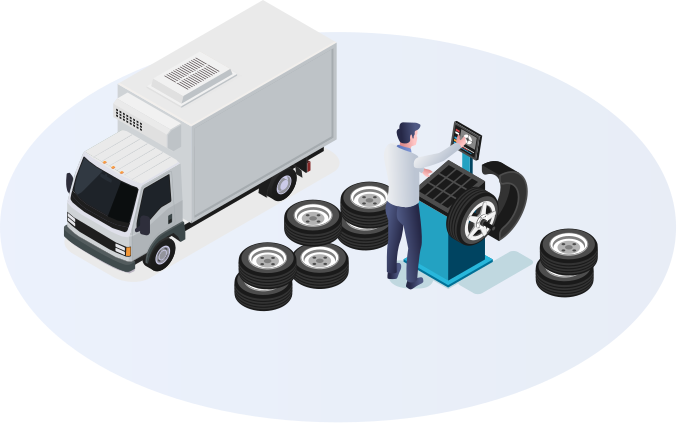
Monitor tire location, condition and Cost per KM to optimize maintenance. Enhance fuel efficiency, safety, and reduce operational costs by tracking tire usage and ensuring timely upkeep.
Schedule a demo
Collaborative Execution

Extending Tyre Life

Monitor Tyre Conditions
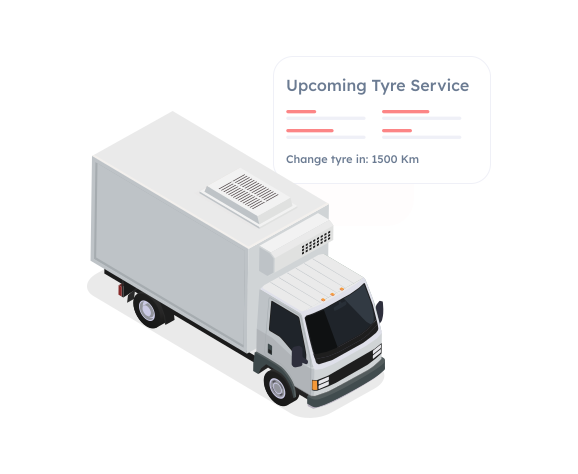
Monitor vital tire health indicators such as tread depth, air pressure, mileage, and age to prevent blowouts and ensure safety on the road.

Extending Tyre Life

Tyre Lifecyle Management

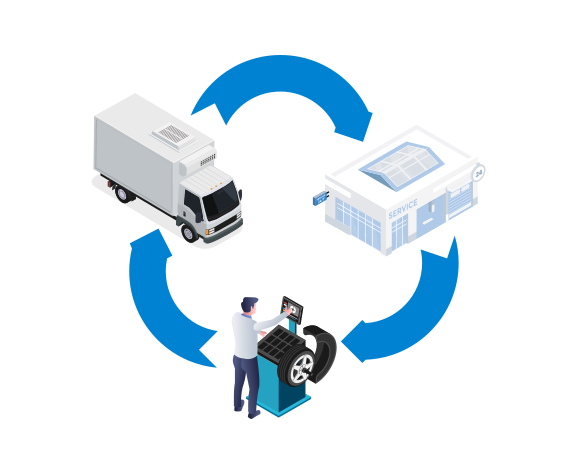
Fleetx Tyre Management streamlines tyre procurement, covering various stages like chassis tyre MRN, new tyre MRN, and tyre recycling. Conduct post-trip tyre inspections with usability and tread depth readings, maintaining inspection checklists. Utilize our mobile app for driver inspections, addressing issues promptly, enhancing safety, and prolonging tyre life.
Tyre Lifecyle Management

Tyre Stock Management

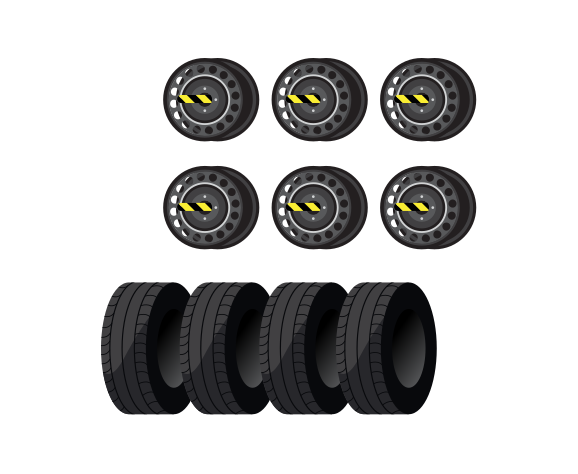
Fleetx Tyre Management digitizes your entire tyre inventory across different branches and brands, ensuring precise tracking of each tyre's axle and position. With this system, you'll never lose sight of your tyres, and also monitor CPKM to ensure overall profitability.
Tyre Stock Management

Tyre Swapping

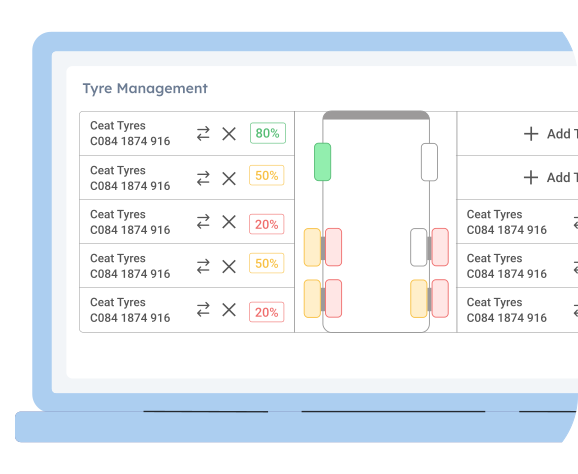
Efficiently manage tyre swapping to enhance tyre longevity and vehicle performance. Monitor the replacement of low-tread tyres on the front and high-tread tyres on the rear to maintain balanced vehicle load distribution, ensuring optimal safety and handling on the road.
Tyre Swapping

Reduce Tyre Theft with RFID Tyre Tags

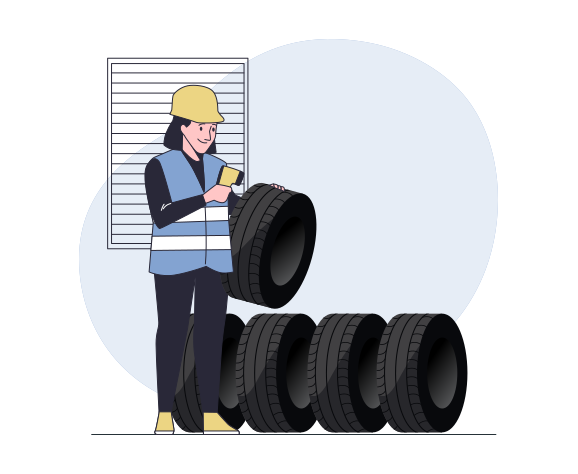
Fleetx RFID tyre tags help in reducing tyre theft by cross-checking the data with the master details stored and in case of any mismatch, send notifications to the respective users/managers via email, SMS. Avoid counterfeiting by tracking the tyre locations to identify possibilities of theft/ pilferage.
Reduce Tyre Theft with RFID Tyre Tags

Frequently Asked Questions

Why is tyre management important for commercial fleet operators?icon
Tyres represent the second largest recurring consumable cost in commercial fleet operations after fuel, typically accounting for 10 to 18 percent of total vehicle operating costs. The same tyre on two different trucks can have lifespans differing by 40 to 60 percent depending on inflation pressure maintenance, load distribution, driving behaviour, road surface, and vehicle mechanical alignment. Fleet tyre management systematically tracks every tyre's lifecycle from purchase through rotation, retreading, and disposal — extracting maximum safe kilometres from every tyre and preventing the expensive and dangerous outcome of tyre failure on the road.
What data does Fleetx track for each tyre in the fleet?icon
Fleetx assigns each tyre a unique identifier and maintains a complete digital record: current vehicle and wheel position (steer, drive, or trailer axle); total kilometres accumulated since fitment and since manufacture or last retread against GPS odometer data; tread depth readings from periodic manual inspections; puncture and repair event history with date, location, and damage type; rotation history; and where TPMS sensors are installed, continuous real-time pressure data. This complete history enables accurate remaining life prediction, optimal retread timing, and detection of abnormal wear before failure.
How does tyre pressure affect fuel consumption and tyre lifespan in trucks?icon
Running a tyre at 20 percent below recommended pressure increases rolling resistance by approximately 10 percent. For a multi-axle truck with multiple underinflated tyres, cumulative fuel consumption increase can be 2 to 4 percent. The impact on tyre life is even more severe: underinflation causes excessive sidewall flexing and heat, reducing tyre lifespan by 20 to 40 percent. Overinflation causes centre tread wear, uneven lifespan, and increased vulnerability to impact damage. TPMS sensors integrated with Fleetx provide continuous per-wheel pressure monitoring with alerts to the fleet manager dashboard and driver app when any tyre deviates from its safe range.
What is tyre retreading and when should fleet operators consider it?icon
Tyre retreading removes worn tread from a sound carcass and bonds new tread rubber onto the carcass structure. A quality retreaded tyre performs comparably to a new tyre in most commercial vehicle applications at 40 to 60 percent of the cost. A carcass can typically be retreaded one to three times during its working life. To be suitable for retreading, the carcass must have no penetrating damage, no structural damage to bead or sidewall, sufficient buffable tread remaining, and no internal delamination detectable by air pressure testing or ultrasonic inspection. Fleetx tracks tread depth and repair history per tyre to identify retread candidates at the optimal time — before carcass damage occurs from running below safe tread depth.
How does Fleetx prevent costly roadside tyre failures?icon
TPMS sensors detect slow punctures and gradual pressure loss before they reach failure. Mileage-based rotation alerts ensure tyres are moved between positions before uneven wear develops. Tread depth alerts trigger when any tyre approaches the minimum safe threshold, enabling planned replacement. Abnormal consumption rate alerts flag tyres wearing faster than expected — often indicating vehicle alignment or mechanical issues destroying tyres continuously. Roadside failure costs three to five times more than a planned workshop replacement, plus vehicle downtime and safety risk.
What is the cost saving potential of systematic tyre management for a mid-sized fleet?icon
The financial case is clear across four areas: extended tyre life (proper pressure, rotation, and retreading timing typically extends average lifespan by 15 to 30 percent); retread utilisation (suitable carcasses retreaded rather than discarded reduces average cost per kilometre by 40 to 60 percent for those tyres); prevented failure costs (eliminating roadside failures saves emergency assistance, downtime, and accident risk); and fuel efficiency (proper inflation reduces fleet-wide fuel consumption by 2 to 4 percent). The cumulative effect typically produces a return on tyre management software investment within a few months for a mid-sized fleet.