Achieve Unprecedented Fleet Visibility with 24/7 Live Streaming & Playback

Elevate your fleet management to a whole new paradigm of control and agility. Our industry-leading technology empowers you to see everything, react instantly, and make data-driven decisions based on real-time insights
Schedule a demo
Real-Time Video Monitoring

Trusted by teams at

Video Telematics
Unparalleled Visibility, Around the Clock
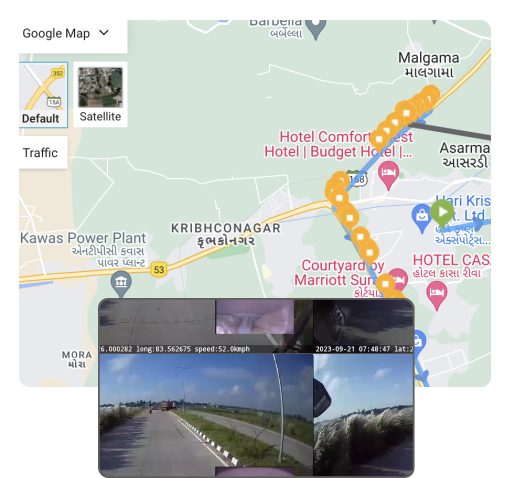
Live Streaming
Live Streaming

Gain a real-time window into your fleet's operations, irrespective of location. Proactively address incidents, optimize dispatching, and enhance driver behavior

24/7 Video Playback
24/7 Video Playback

Rewind the clock with comprehensive video history for up to 3-10 days*. Investigate events, verify deliveries, and ensure regulatory compliance with ease

Unwavering Vigilance, Even at Rest
Engine-off Recording

Our advanced cameras capture crucial footage even when vehicles are parked, offering a complete picture of your fleet's activity. Comes with configurable settings to prevent driver privacy or to prevent vehicle battery from draining below the set threshold

Low light visibility

View activity near your vehicles, even in low-light conditions, minimizing potential losses

Reap Tangible Benefits Across Your Organisation
Enhanced Safety
Enhanced Safety

Minimize accidents and improve driver behavior through real-time monitoring, potentially reducing insurance premiums

Elevated Customer Service

Respond swiftly to customer concerns and verify deliveries effortlessly, increasing customer satisfaction

Reduced Costs
Reduced Costs

Minimize losses from theft or damage with proactive surveillance.

Take the Reins of Your Fleet Operations

Contact us today to explore how our customized Video Telematics solutions can empower your business. We offer a diverse range of solutions and features to cater to any budget and fleet size

Real-Time Video Monitoring

Frequently asked questions

What is real-time video monitoring for commercial vehicles?icon
Real-time video monitoring for commercial vehicles uses connected dashcams and cabin cameras to transmit live or near-live video feeds from vehicles to a fleet management platform. Unlike standard dashcams that only store footage locally, real-time video monitoring enables fleet managers to view a live stream from any vehicle's camera on demand, receive automatically uploaded event clips triggered by driving incidents or AI safety detections, and review cloud-stored footage remotely without waiting for the vehicle to return to depot. This creates a significant capability shift: safety and security events can be reviewed and acted upon as they happen, not hours or days later.
What are the primary use cases for real-time video monitoring in Indian commercial fleets?icon
The primary use cases are: safety incident review — reviewing AI-detected driver behaviour events (distraction, drowsiness, phone use, harsh driving) with linked video immediately after the event, enabling same-day coaching; accident evidence — having video evidence of exactly what happened within minutes of a collision, before the scene is disturbed and witness accounts diverge; cargo security — monitoring load security and verifying cargo condition at loading and delivery through driver-triggered video captures; driver verification — confirming the registered driver is operating the vehicle at trip start; and exception-triggered live viewing — when an alert fires (sudden stop, panic button, route deviation to a high-risk area), the operations centre can open a live feed immediately to assess the situation.
How does AI-powered real-time video monitoring differ from basic dashcam recording?icon
Basic dashcams record video to a local memory card continuously or on vibration-trigger — the footage is only accessible when the vehicle returns and the card is physically extracted, making it useful only for post-incident review. AI-powered real-time video monitoring analyses the camera feed in real time using computer vision models: detecting when a driver's eyes leave the road, recognising a phone in the driver's hand, identifying head nodding associated with drowsiness, monitoring following distance for forward collision risk. These analyses happen onboard in real time, triggering immediate in-cabin audio or visual alerts, while simultaneously saving a linked video clip to cloud storage and notifying the fleet manager. The transition from passive recorder to active safety system is the core distinction.
What connectivity infrastructure is required for real-time video streaming from commercial vehicles?icon
Real-time video streaming requires cellular data connectivity — 4G LTE provides the bandwidth necessary for live video at practical resolution. In India, 4G coverage on national highways and major state highways is sufficient for continuous event-clip uploads and periodic live streaming. Continuous live streaming of full-resolution video from large fleets simultaneously is bandwidth and cost-intensive; practical implementations use event-triggered clip uploads (15 to 30 second clips around detected events) as the primary data model, with on-demand live streaming available for specific vehicles when the fleet manager requests it. Devices buffer footage locally for offline roads and upload when connectivity is restored, ensuring no event clip is lost due to temporary coverage gaps.
How does real-time video monitoring help fleet managers handle accident claims faster?icon
When a commercial vehicle is involved in a collision, the critical window for evidence collection is immediately after the incident — before the scene is cleared, before accounts solidify, and before insurance investigators arrive. With real-time video monitoring, the fleet manager can pull the event-triggered clip within minutes of a collision alert firing, view exactly what happened, and share the footage with the company's insurance team and legal advisors before the other party has filed a claim. For incidents where the truck driver is not at fault — a car changing lanes suddenly, an obstacle in the road, an animal crossing — having clear video evidence that can be presented immediately typically resolves insurance claims faster and prevents fraudulent claims against the fleet.
What are the data privacy and consent requirements for in-cabin video monitoring of drivers in India?icon
In-cabin driver-facing cameras capture biometric data — faces, expressions, and gaze — which under Indian data protection principles requires informed consent from the person being recorded. Fleet operators implementing driver-facing cameras should obtain documented written consent from drivers covering: what is recorded and for how long it is stored; who has access to footage; that footage is used for safety coaching and accident management, not disciplinary action for minor events; and driver rights to view footage of themselves. Consent should be part of the employment or engagement agreement, not an afterthought. Recording should be active only during work trips — personal time recording is a serious privacy violation. Fleetx's implementation supports consent documentation and time-based activation limiting recording to active trip periods.
