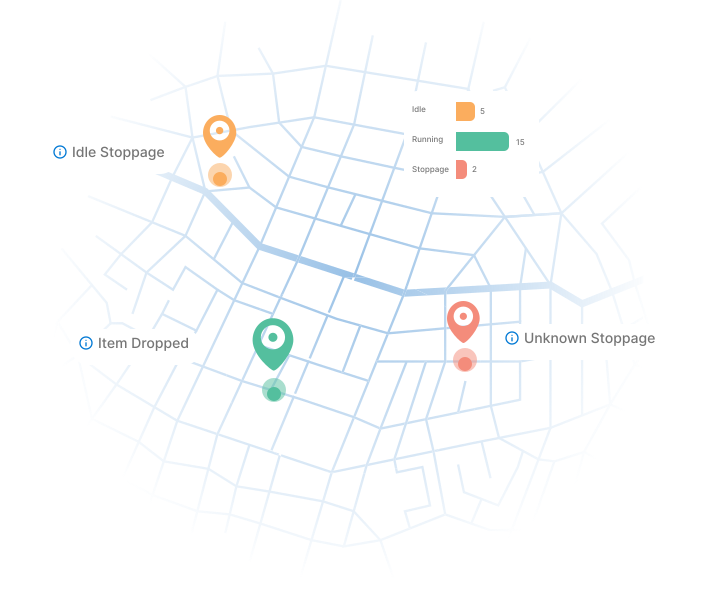


Smart Geofencing
Receive automated notifications for your vehicles' arrivals/departures at designated locations or in case of unusual/night driving activity.

Bird Eye View
Get instant aerial view of your entire fleet and accordingly assign Jobs to the vehicles. Easily guide route navigation using real-time traffic feature and track breakdown vehicles.

Share Live Status
Enhance customer service with live location links, providing accurate ETAs for optimal communication and satisfaction.
Track Anything and Everything
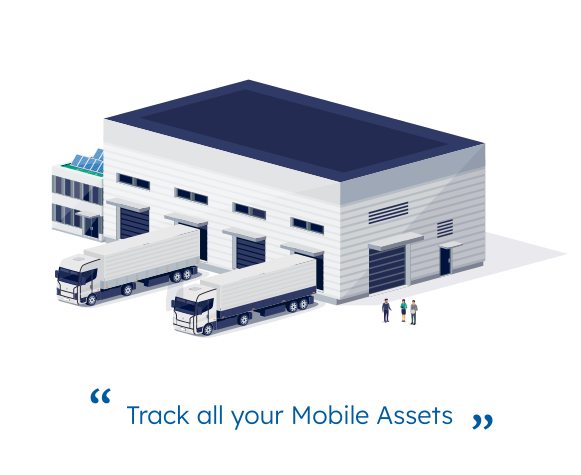
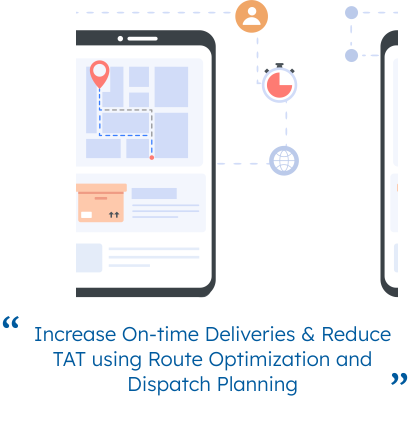
Route Planning
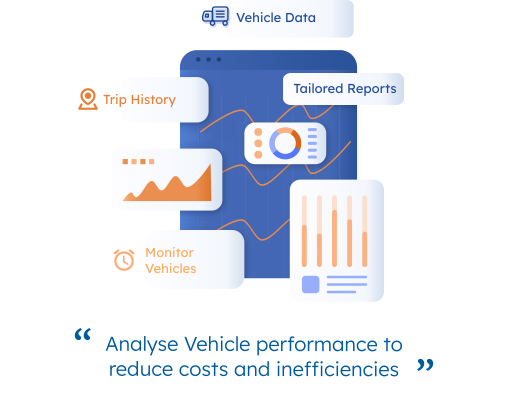
Custom Reporting
AIS 140 GPS
SIM-Based Tracking

Gain insights that empower you
Efficient Operations
Live Vehicle Tracking
Prevent Breakdown
Preventive Maintenance
Minimize Stoppages
Reduce Cost
Improve ETA
Monitor Driving Behaviour
Charting New Routes, Defining Boundaries with Precision Navigation & Geofencing
Frequently Asked Questions
How does GPS vehicle tracking work?
A GPS tracking system uses a network of satellites orbiting the earth to determine the precise geographic location of a vehicle in real time. A GPS device installed in the vehicle continuously receives signals from multiple satellites and uses time differences between those signals to calculate exact latitude, longitude, speed, and heading. This data is transmitted over a mobile network to a cloud-based platform where it is displayed on a map and stored for historical analysis. Fleet operators can see every vehicle's location, speed, idle time, route deviations, and a full timestamped trip history.
What is the difference between GPS tracking and full vehicle telematics?
GPS tracking answers where a vehicle is — location, speed, distance, and movement history. Vehicle telematics is broader, combining GPS data with engine diagnostics (RPM, temperature, fault codes), fuel consumption from onboard sensors, driver behaviour events (harsh braking, rapid acceleration, cornering), vehicle health alerts, and dashcam video in advanced deployments. The practical difference: GPS tracking tells you a vehicle was late; telematics additionally tells you the driver oversped, idled for an hour, and fuel consumption was 18 percent above benchmark for that route.
Is AIS 140 GPS compliance mandatory for commercial vehicles in India?
Yes. AIS 140 is mandated by the Ministry of Road Transport and Highways for GPS and emergency communication devices in all commercial vehicles. An AIS 140-compliant device must include a certified emergency panic button that sends alerts to the state emergency response centre, two-way communication with government Vehicle Location Tracking (VLT) servers, tamper-detection mechanisms, and specific data transmission protocols. Operating without a certified device can result in fines and permit cancellations. Fleetx supports AIS 140-compliant hardware and helps operators stay current with MoRTH specifications.
How does geofencing work and what is it used for in fleet management?
Geofencing creates virtual boundaries on a map around depots, customer warehouses, fuel stations, or restricted zones. When a tracked vehicle enters or exits a boundary, the system automatically triggers a configurable alert. In daily fleet operations, geofencing enables: automatic trip start and end detection when vehicles leave and return to depot; instant notifications when a vehicle arrives at a customer site; flags for unauthorised route deviations or vehicle usage outside working hours; security monitoring for overnight parking; and automated e-way bill extension requests when a vehicle has not left a zone and the bill validity is approaching expiry.
Can GPS tracking reduce fleet fuel costs, and by how much?
Yes, and the savings are typically significant. Route optimisation cuts fuel burned per delivery. Idle time monitoring identifies vehicles with engines running at loading docks, toll plazas, and in traffic — idle time reduction alone typically accounts for 3 to 8 percent of total fuel savings. Driver behaviour monitoring — tracking overspeeding and harsh acceleration — reduces consumption further, since a truck at 80 km/h burns 20 to 30 percent more fuel than one at 60 km/h. Fuel theft detection through integrated sensors catches short-fuelling and siphoning. Fleetx customers deploying GPS with fuel sensors and behaviour monitoring typically report total fuel cost reductions of 10 to 25 percent within the first year.
What is the typical installation process for GPS devices on a commercial fleet?
Installation begins with a hardware assessment selecting the right GPS device based on vehicle type and any additional sensors required (fuel probes, temperature sensors, dashcams). Certified installers then visit the fleet location or depot to fit the devices. For a standard GPS device, installation on one vehicle takes one to two hours: the device is connected to the vehicle's power supply, antennas positioned for optimal signal reception, and the device registered on the Fleetx platform and tested for data transmission. For larger fleets, Fleetx coordinates phased installations with minimal disruption to daily operations.
How accurate is GPS tracking in real-world fleet conditions across India?
Modern GPS devices typically achieve 3 to 10 metres accuracy under open-sky conditions — sufficient for precise route tracking, geofencing, and distance calculation. In urban areas with tall buildings or heavy tree cover, accuracy may reduce to 20 to 50 metres. Most devices include accelerometer dead reckoning to maintain position estimates during brief signal interruptions. In 4G coverage areas covering most of India's highway network, real-time transmission is reliable. In 2G-only areas, devices buffer data locally and transmit when coverage improves, ensuring a complete historical trip record.
Have More Questions? Connect With Us!
See Fleetx in action! Schedule a free demo for efficient fleet management. Let's optimize your fleet together
Schedule Now